
themes bring together the breadth and depth of a collection
Composition and narrative
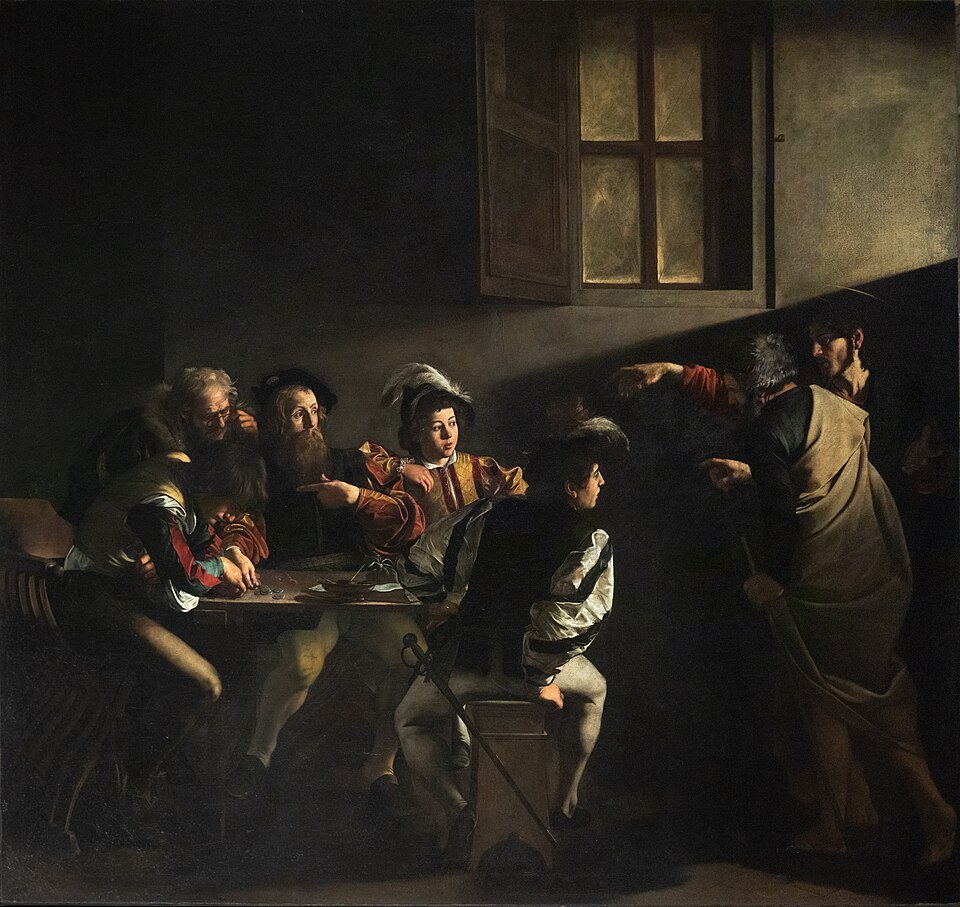
In Nighthawks, The Calling of Saint Matthew, and The Dream, angles within the painting corral the eye to an insular drama. For Hopper’s painting, the sharp delineation of inside and outside, solitary and together, closeness and distance, expresses a contemporary crisis of loneliness in the mid-20th century. Caravaggio’s famous composition uses the technique of chiaroscuro, where a beam of light points to the Biblical calling of the soon-to-be saint. Henri Rousseau’s surreal landscape, with a reclining nude, does quite the opposite of Nighthawks and The Calling of Saint Matthew. The Dream’s abstracted vegetation fills the canvas such that the figure feels immersed in the fantastical scene.
The eye ON (and oF) women
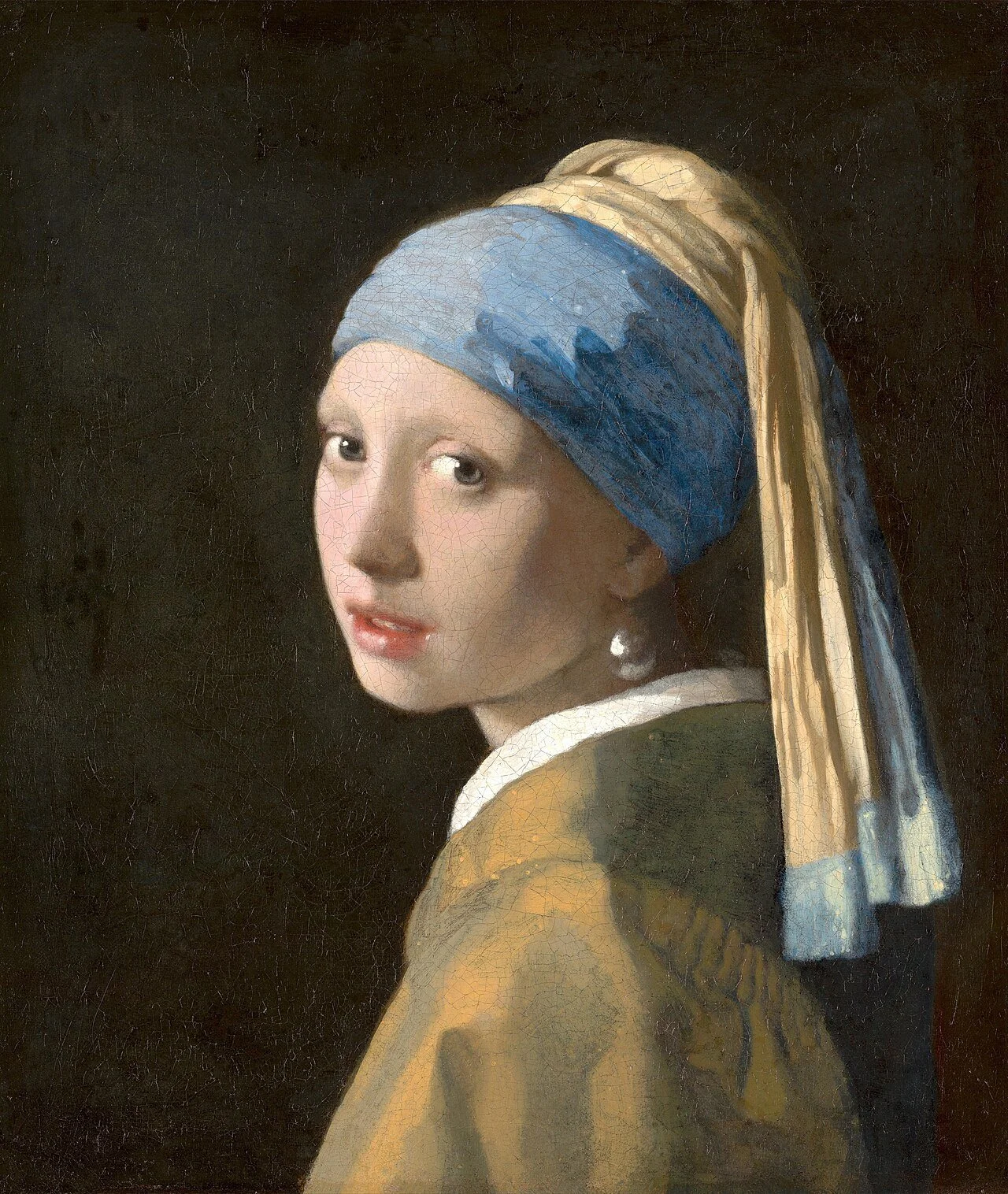
The female form has many iterations in art history, from the mythical sculptures in Ancient Rome to Picasso’s contorted women to women painted and portrayed with assuredness. The last is best exemplified in Olympia, Manet’s painting where the lady of the night addresses the audience. She is not reclining in invitation. She is not averting her gaze in modesty. She is looking directly at whoever has entered the room. Vermeer’s kind treatment, where light bounces off of the woman’s skin in Girl with a Pearl Earring, finds an unlikely pair in the ornamental venus in Botticelli’s ordered, balanced, and performative The Birth of Venus. In the German Expressionist manner, Egon Schiele’s contorted woman in Seated Woman with Bent Knee is raw, vulnerable, and honest.
finding surface
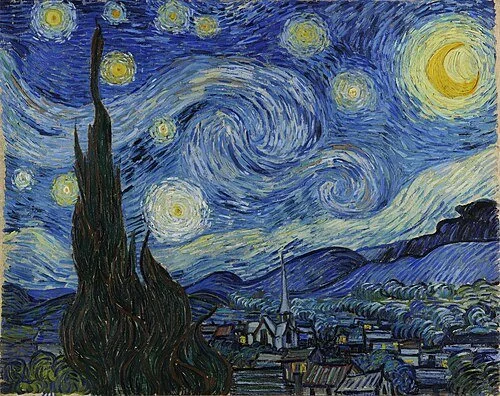
From the 19th to 20th centuries, surface is an unfolding concept for the Impressionists, Post-Impressionists, and Modernists. Chronologically, Monet spearheads transforming paint and brushstroke into fleeting perceptions of the landscape and city life (here, his Water Lilies), from which van Gogh imbues the psychological torment of existence through the almost serene The Starry Night. For Manet and Cézanne, the stage was set for the canvas as a place for spatial experimentation. Manet’s Luncheon on the Grass conflates depth to shapes sharing the surface, and Cézanne’s assertion that space can be created through more abstract forms in Mont Sainte-Victoire. Klimt flattens the surface even more, drawing on the decorative to frame his emotive subjects in The Kiss.