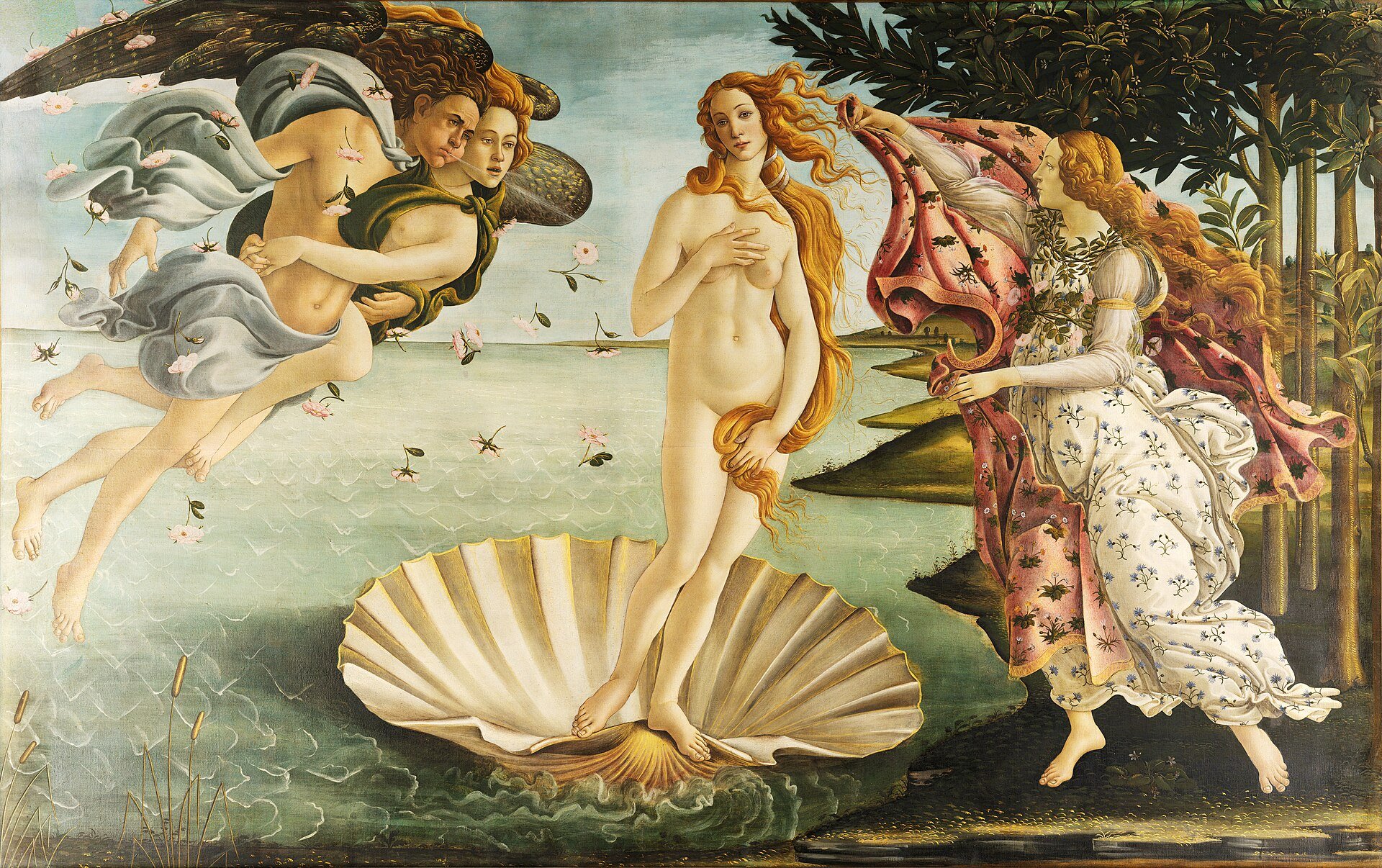
Commissioned most likely for the Medici family, The Birth of Venus draws on classical mythology to depict the goddess emerging from the sea fully formed, blown to shore by the wind gods Zephyrus and Chloris. The use of a female nude as a monumental, central subject was extraordinarily rare in devotional Italian painting at the time, and Botticelli leaned on allegory and an homage to antique sculptural sources to place the iconography decidedly in the Renaissance of the time. The figure's impossible, elongated proportions — her neck too long, her shoulder too sloped — are not anatomical errors but deliberate stylizations that give Venus an otherworldly, idealized grace.
about the artist
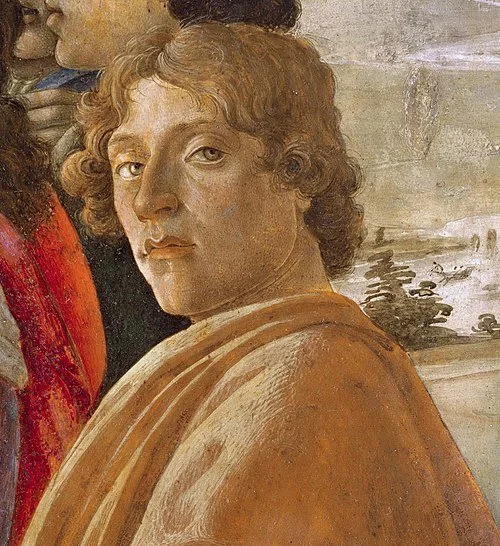
Sandro Botticelli was a Florentine painter working at the height of the Medici Renaissance, producing altarpieces, mythological allegories, and portraits that defined the humanist visual culture of late fifteenth-century Italy. He was invited to Rome to contribute frescoes to the Sistine Chapel, though these works are now almost entirely overshadowed by his panel paintings. In his final years, influenced by the apocalyptic preacher Savonarola, Botticelli reportedly turned away from secular work; he died in 1510 having fallen largely out of fashion, and his reputation was not fully revived until the Pre-Raphaelites championed him in the nineteenth century.
Sandro Botticelli
The Birth of Venus, 1485
Tempera on canvas