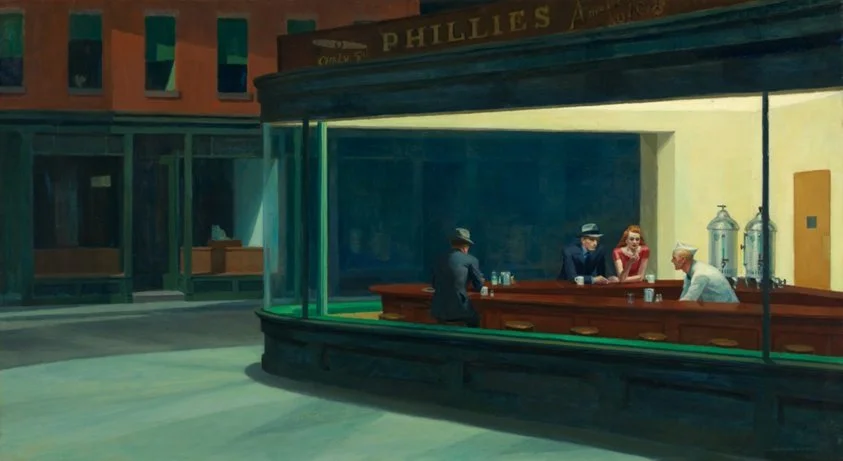
Nighthawks depicts four figures in a brightly lit all-night diner glimpsed through a curved plate-glass window from the darkened street outside. No door is visible, and the figures — two men, a woman, and a counterman — share the same space without appearing to share any connection, surrounded by an urban emptiness that Hopper described as "the loneliness of a large city."
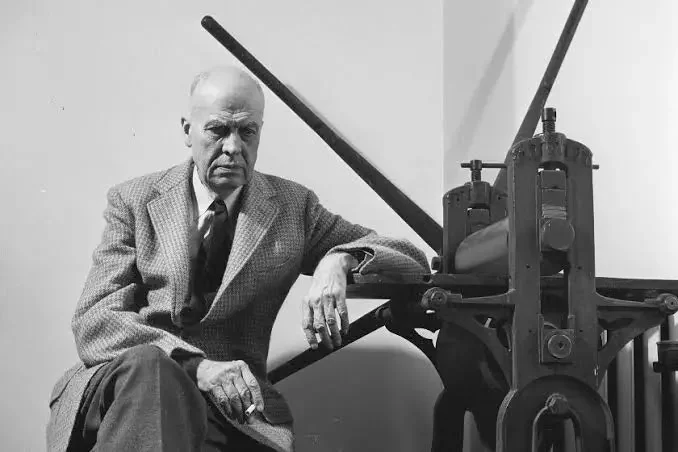
Edward Hopper’s visions of American solitude — motel rooms, gas stations, empty theaters, sunlit storefronts — draw attention to both his handling of composition equally as the haunting loneliness. His work draws on a deep engagement with American light: the hard, clear light of New England, the yellow light of late afternoon, the artificial light of modern commercial spaces. He almost never painted figures in direct communication with one another, and the emotional register of his work — suspended, unresolved, neither tragic nor comic — is entirely his own.
Edward Hopper
Nighthawks, 1942
Oil on canvas
about the artist