Gustav Klimt
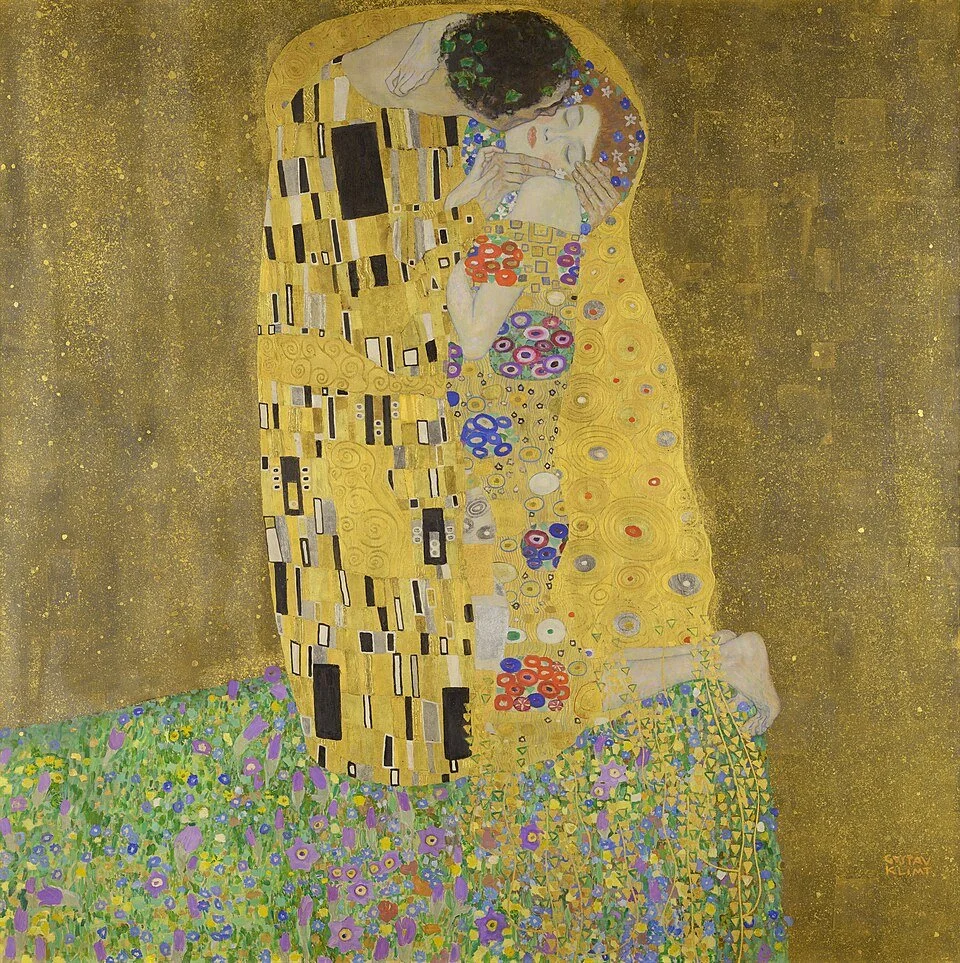
The Kiss, 1901-08
Oil and gold leaf on canvas
Painted during Klimt's so-called Golden Phase, The Kiss depicts two figures entwined on a flower-covered ledge, their bodies wrapped in elaborately ornamented gold robes that dissolve them into a single decorative form — the boundary between two people and the union between them made literally indistinguishable. The gold leaf surface, borrowed from Byzantine mosaics and Japanese decorative arts, gives the painting an icon-like quality that lifts it out of ordinary pictorial space into something closer to devotional object. It was purchased by the Austrian government before it was even finished and has never left Vienna, installed permanently at the Belvedere museum where it draws more visitors than any other work in Austria.
about the artist
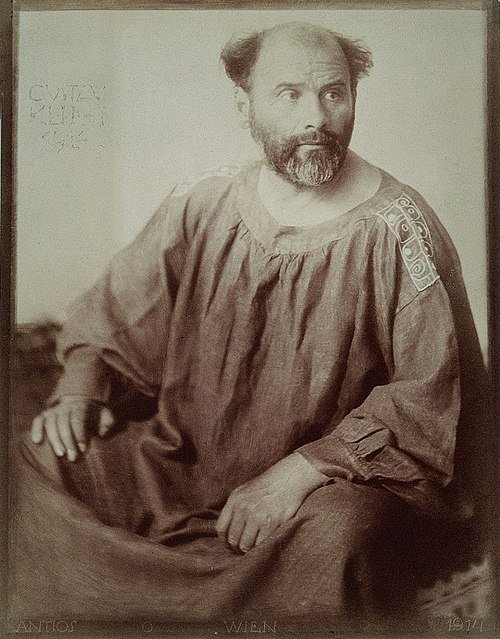
Gustav Klimt was the founding president of the Vienna Secession, the group of artists who in 1897 broke from the conservative Austrian arts establishment to pursue a synthesis of fine art and decorative design under the motto Der Zeit ihre Kunst, der Kunst ihre Freiheit — "To every age its art, to art its freedom." Born in Vienna in 1862 to a gold engraver, Klimt absorbed his father's craft into his painting practice, developing a style that layered representational figures against flat, richly ornamented backgrounds drawing on sources as diverse as ancient Egyptian art, Greek vase painting, and Japanese prints. His influence on Art Nouveau and on the broader decorative ambitions of European modernism was enormous and immediate.