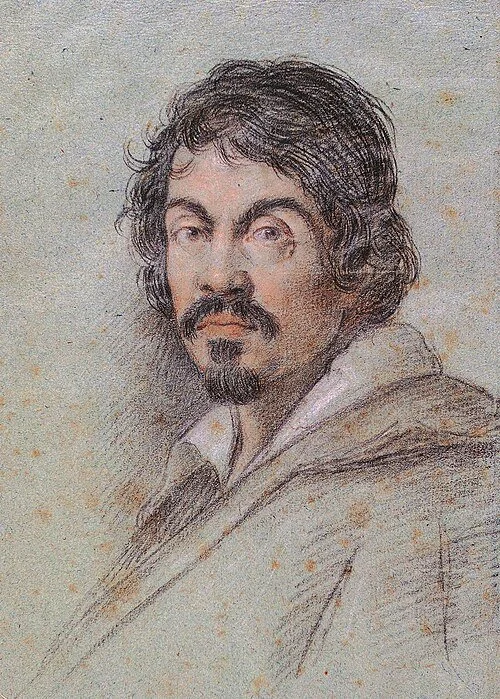
Caravaggio
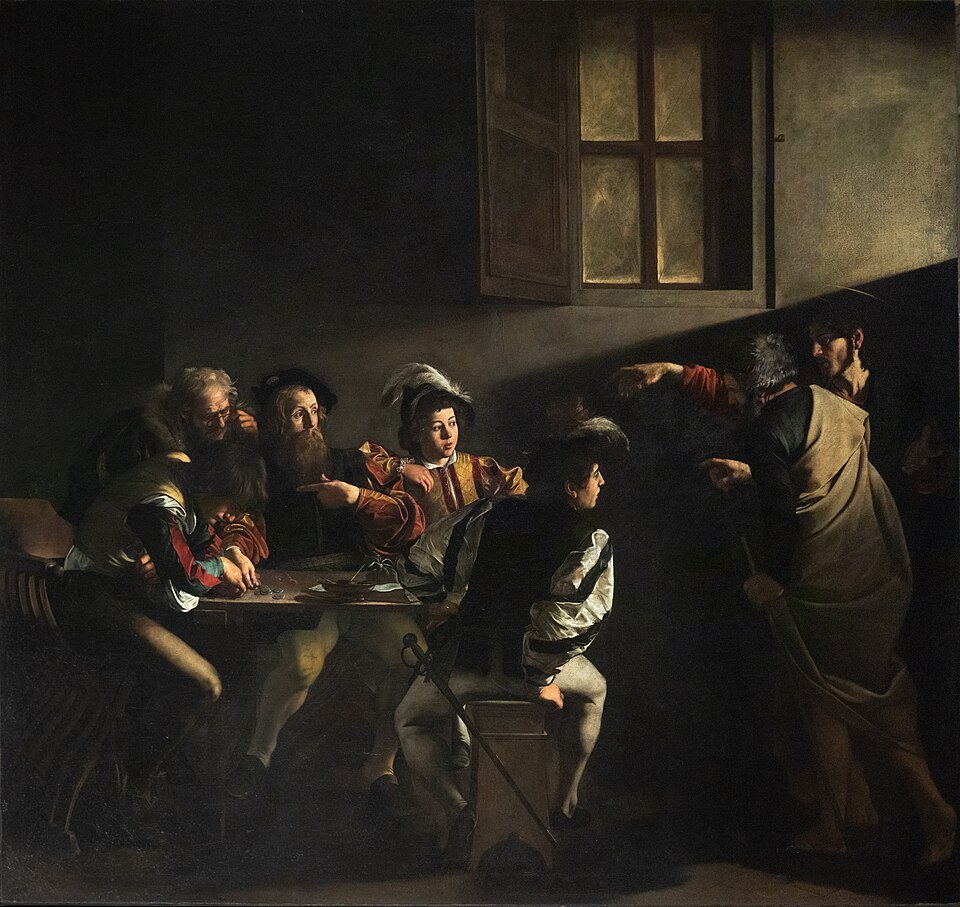
The Calling of Saint Matthew, 1600
Oil on canvas
Painted for the Contarelli Chapel in Rome, this canvas depicts the moment Christ summons the tax collector Matthew from his counting table, rendered not in a heavenly setting but in what appears to be a contemporary Roman tavern, with figures in ordinary street clothes. The drama is carried almost entirely by a single shaft of light entering from the right — cutting across the darkness and illuminating the outstretched arm of Christ, whose gesture echoes Michelangelo's Creation of Adam with deliberate and provocative economy. Matthew's response is ambiguous: scholars still debate which of the five figures at the table is actually him, and whether the pointing hand belongs to Christ or to Peter — an uncertainty that gives the painting an inexhaustible psychological charge.
about the artist
Michelangelo Merisi da Caravaggio worked in Rome, Naples, Malta, and Sicily in a career of barely two decades, yet his invention of tenebrism — the dramatic use of deep shadow against concentrated light — transformed European painting so completely that nearly every major painter of the seventeenth century defined themselves in relation to him. He left behind a body of work whose psychological intensity and physical realism had no real precedent.