
Paul Cézanne
Mont Sainte-Victoire, 1904
Oil on canvas
Cézanne returned to this mountain near his hometown of Aix-en-Provence dozens of times over the last two decades of his life, producing a series of paintings and watercolors that progressively stripped the landscape of atmospheric detail in favor of underlying geometric structure. In this late version, the mountain is rendered through patches of color — greens, ochres, blues — that function simultaneously as descriptive marks and as abstract planar units, the distinction between foreground and distance nearly dissolved. Picasso and Braque studied these late Cézannes obsessively, and the direct line from this series to the invention of Cubism is one of the clearest in modern art history.
About the artist
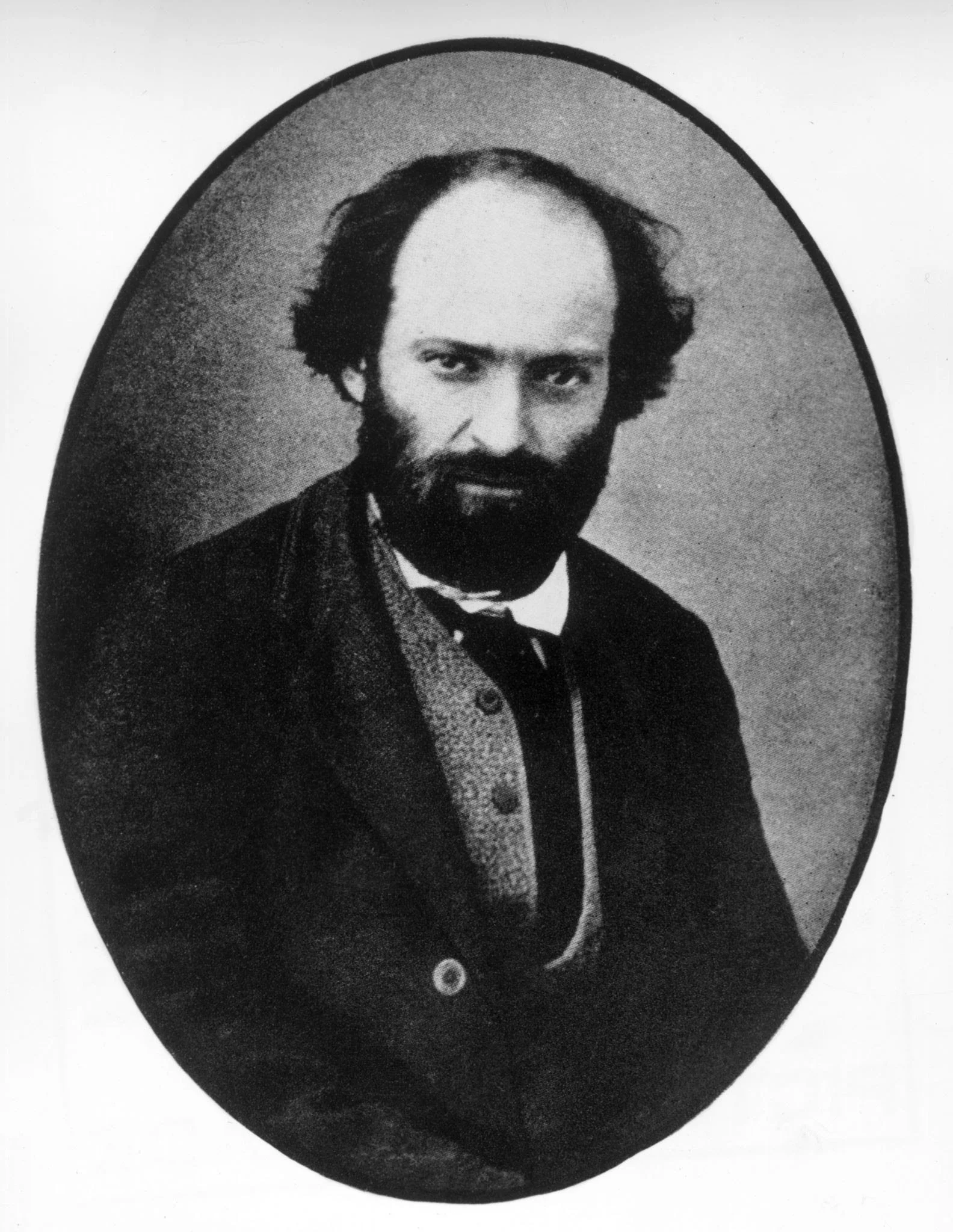
Paul Cézanne, a revolutionary artist often found outside of traditional circles, pursued his investigation of form, color, and pictorial structure with an intensity that bordered on the monastic. Born in Aix-en-Provence in 1839, he had an uneasy relationship with the Impressionists whose exhibitions he occasionally joined. His influence on twentieth-century painting is almost incalculable: he is the father of Cubism, the godfather of Fauvism, and the figure from whom nearly every significant modernist claimed descent.