Marlene Dumas
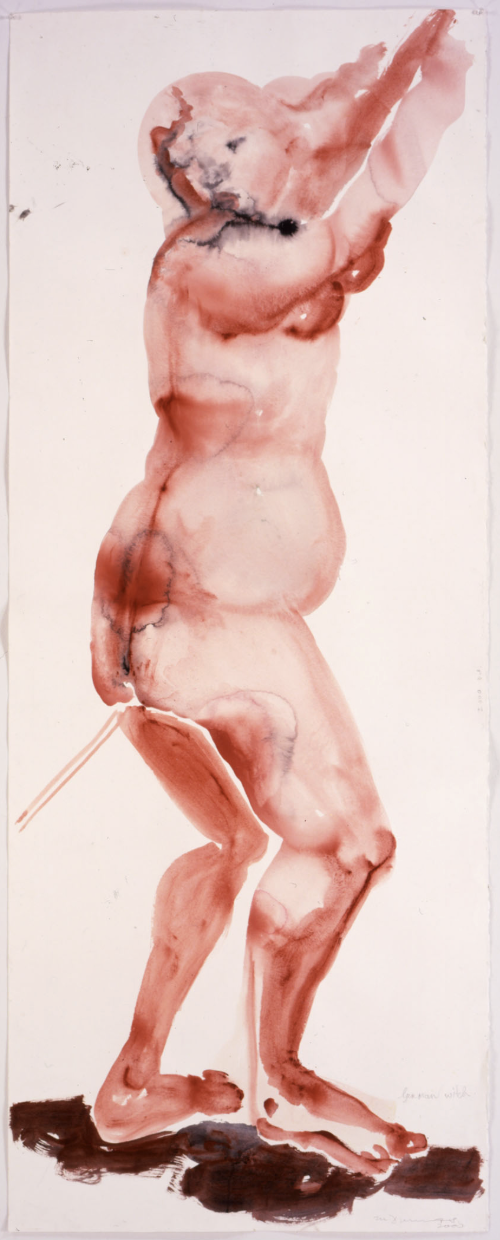
German Witch, 2000
Ink and acrylic on paper
90 1/4 x 35 1/2 inches (229.2 x 90.2 cm)
In German Witch, Dumas confronts the specter of historical persecution and female embodiment through a stark, haunting portrait whose smudged forms and shadowed gaze seem to flicker between accusation and empathy. The figure’s indistinct edges and somber palette dissolve specificity, so that the “witch” becomes less a labeled subject than a vessel of projection—fear, longing, repression, and identification all converge within the ambiguity of her painted surface. Here, as in much of Dumas’s work, the power lies not in narrative clarity but in the painting’s ability to hold contradiction, inviting viewers to confront both historical violence and the internal logics of judgment and desire.
about the artist
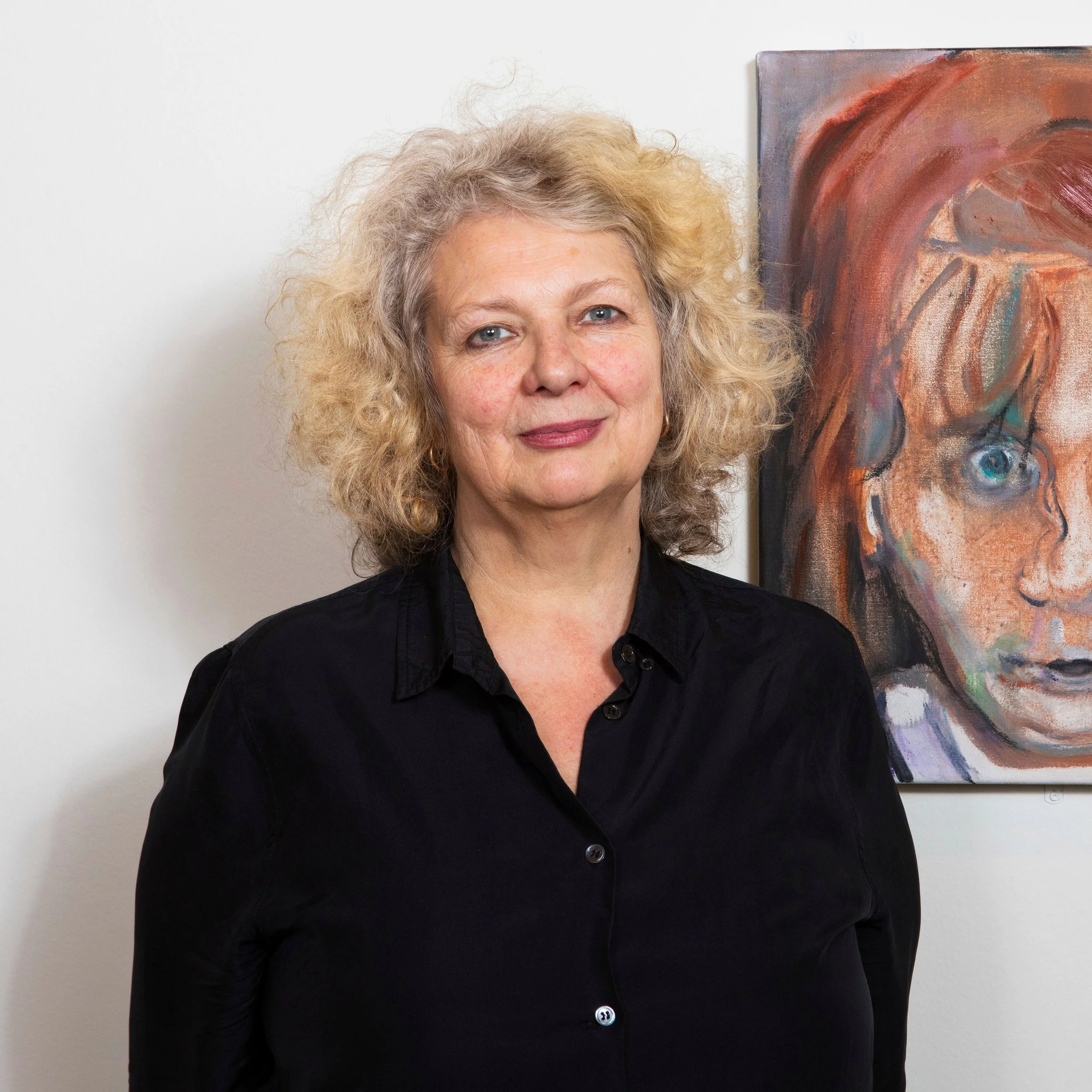
Marlene Dumas (b. 1953, Cape Town, South Africa) works in a liminal space where paint itself negotiates the instability of identity, desire, and emotion. Her figures—often portraits, often partial or obscured—emerge from washes, drips, and smudges that both reveal and dissolve form, making the act of looking an exercise in interpretation. This slippage between recognition and ambiguity allows representation to carry its own contradictions: the body, face, or gesture is never fully fixed, always slipping through the medium’s materiality, so that psychological presence and painterly facture exist in constant tension. Across her practice, Dumas exploits this instability, demonstrating that the power of painting lies not in exactitude but in its capacity to evoke the unknowable and the mutable.