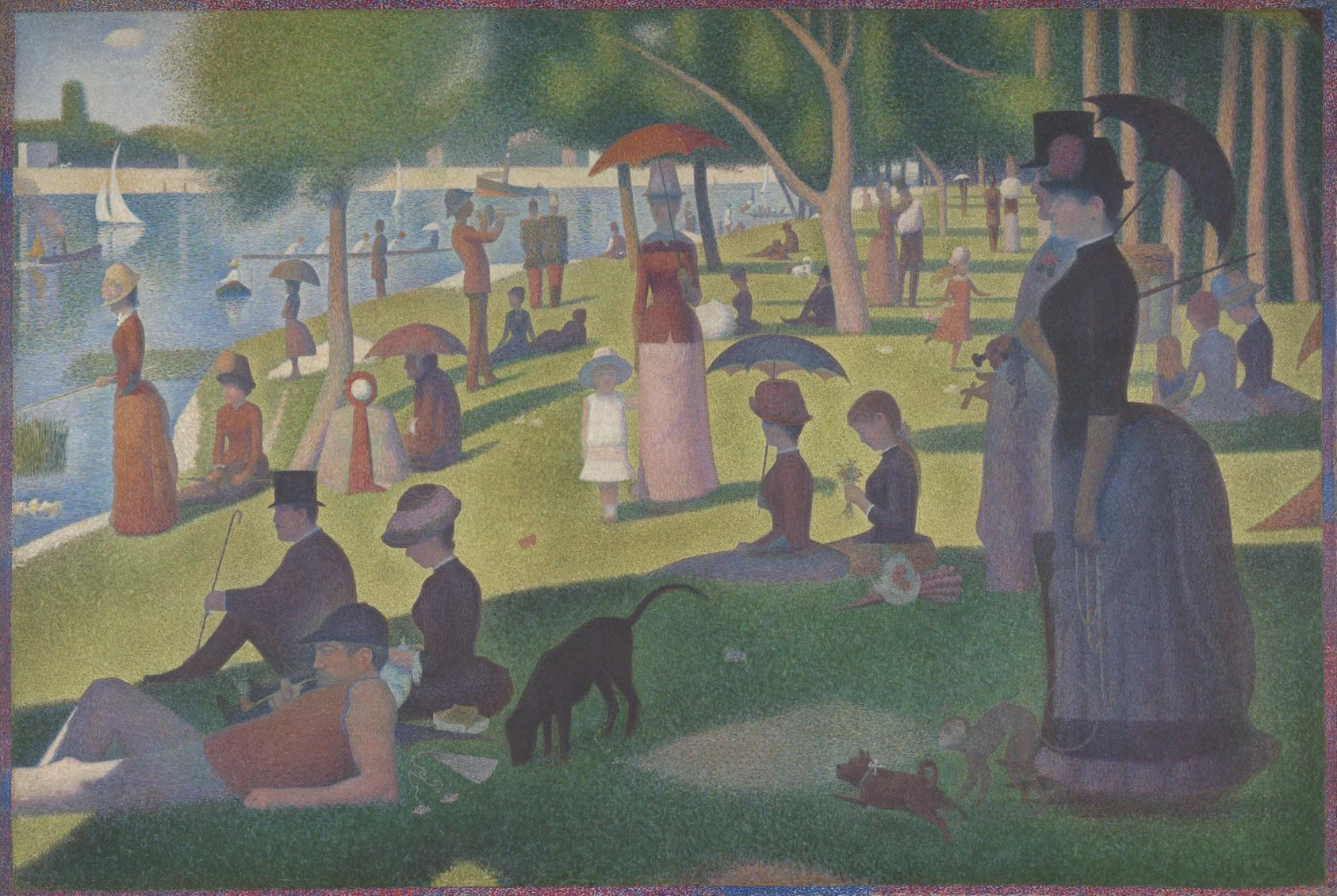
Seurat’s masterpiece is a carefully developed Pointillist technique — thousands of small, methodically placed dots of pure color that the eye blends at a distance. The figures are stiff, almost hieratic, stripped of the casual spontaneity that characterized Impressionist scenes of modern leisure, giving the painting an eerie, timeless quality despite its ostensibly contemporary subject. The painting was shown at the final Impressionist exhibition and immediately established Seurat as the leader of a new movement, Neo-Impressionism, which sought to place painting on a scientific footing.
about the artist
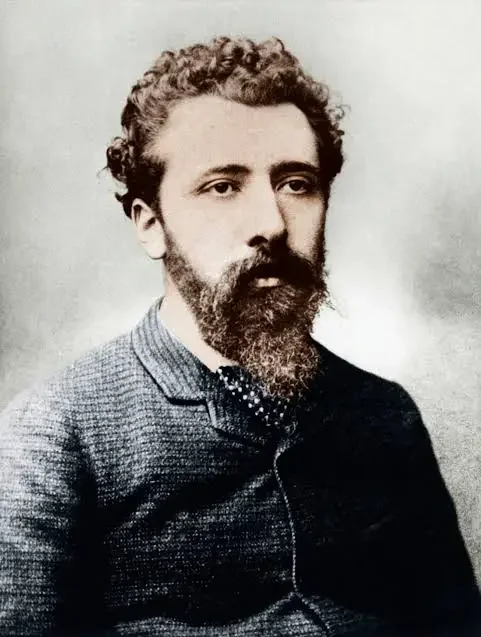
Georges Seurat was a French painter who developed a body of work built on his systematic application of color theory — particularly the writings of Michel Eugène Chevreul and Ogden Rood on simultaneous contrast and optical mixing. He was intensely intellectual and secretive about his methods, believing he had discovered a scientific grammar for painting that could produce predictable emotional responses through the precise manipulation of color and line direction.
Georges Seurat
A Sunday on La Grande Jatte, 1884
Oil on canvas